

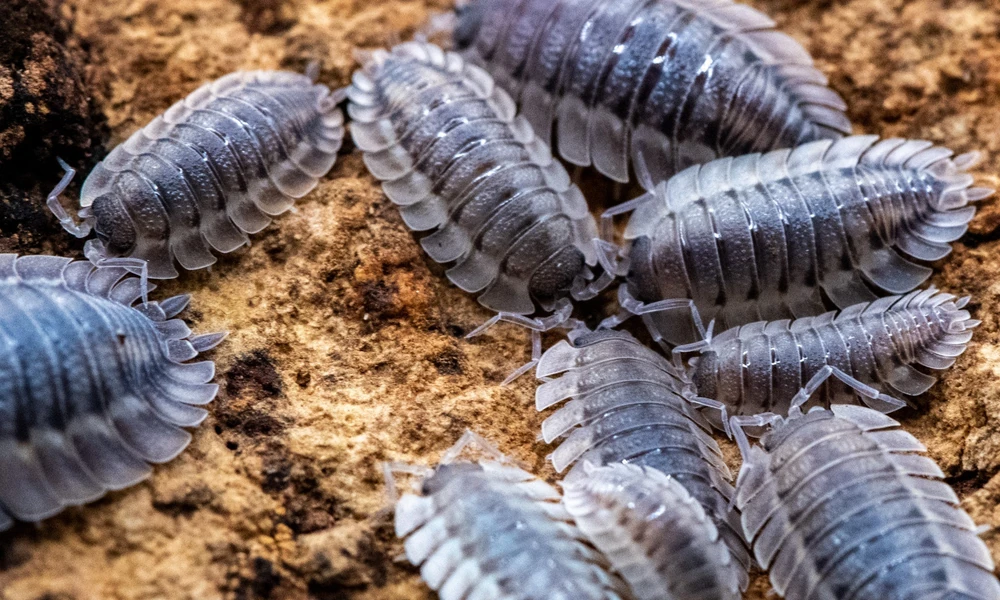
Most people shopping beginner isopods for sale fixate on the wrong decision first. Species, colours, patterns, hours of scrolling. Then the tank gets thrown together in an afternoon, substrate barely considered.
Wrong order. Species matters far less than what it’s going into. A handful of decisions made before the colony ever arrives will do more for its odds than which species ends up inside it.
Substrate depth and composition
Most setups fall short right here. A thin layer of generic substrate looks fine on day one. Doesn’t hold moisture evenly though. Doesn’t support burrowing. Breaks down fast once a colony’s actually working through it.
A genuine mix does better. Organic material, leaf litter, decaying wood, folded through rather than dumped on top. Deep enough that moisture can vary through the layers instead of drying out uniformly from the surface down. Isopods spend a lot of time buried, and a shallow setup gives them nowhere to retreat to when conditions up top aren’t ideal.
The humidity gradient, not just humidity
New keepers often aim for a single humidity target, misting until it “feels right” and assuming that’s the job done. Most species do better with a gradient instead, a damp side and a drier side, so the colony can move to whichever suits them at a given moment.
This matters more than species selection, if we’re honest about where things actually go wrong. A forgiving species in a poorly gradiented tank can still struggle. A slightly less forgiving species in a well-built one often does fine regardless.
Starting numbers
Five or six individuals might survive, but that leaves almost no buffer for the early losses every colony experiences. A larger starting group, twenty or thirty where budget allows, absorbs normal early attrition without threatening the whole thing.
This is one of the more common gaps between expectation and reality. Losses in the first few weeks are normal. Not a warning sign. Starting numbers exist specifically to absorb that.
What to lock in before ordering
- Substrate depth of several inches minimum, not a thin dusting
- A genuine humidity gradient, not a single misted zone
- Leaf litter and decayed wood mixed through, not just added on top
- A starting group large enough to survive normal early losses
- Ventilation that avoids stagnant air without drying the tank out too fast
Get these five right before the colony arrives and most of what gets blamed on species choice simply stops being an issue.
Setting expectations for the first few weeks
Even a well-prepared setup takes time to settle. Growth is slow at first. Individual isopods can be harder to spot while they adjust. Nothing dramatic happens for a while, and that’s fine. That’s the colony finding its footing in a tank actually built to support it.
Sort the setup decisions above before browsing beginner isopods for sale with any real intent to buy, and the species question gets a lot easier to answer. Setup first, species second.